

Welcome
Congratulations on providing your child the opportunity to play in a fantastic sport! Just as there is a lot to learn being a player, there are things that parents need to understand, which will enable you to help your player in their learning.
The guide that is provided here will help you to understand basic soccer play, strategy, a nd laws. It will provide for a more enjoyable experience for both you and your player. You will be able to identify items for both yourself and your players benefit. Please take a moment to read through this guide and pass it on to your player for them to review! This guide is also good reading for all new coaches! Retrieve the guide by clicking on the blue button, above.
Recreational or Competitive Soccer?
One of the first questions that a new soccer parent may face is do I want my child to play competitive or recreational soccer. This is a question that needs to be discussed with the player.
The parent needs to fully understand that there is a difference between the playing environment within a competitive team and that of a recreational team. Playing ability portrays the importance of a player to a competitive team, at all times. This adds stress to playing. The following items can give you insight on stress in competitive play:
- How to Help Kids Cope With the Stress of Competitive Sports
- Stress in Youth Sports Kids | Youth Sports Psychology
- 5 Tips to Reduce Competitive Sports Stress in Kids – The Bank
Recreational Soccer
These games are typically for ‘fun’ and often standings for teams are accordingly not kept, for U6 & U8 teams. The emphasis is on having fun and learning soccer skills. Teams typically do not travel, and there are no extra expenses for playing on the team. Teams will normally play at the same location, each week.
Recreational players are often guaranteed at least 50% playing time in each game, by the league. Typically 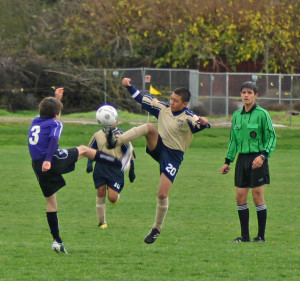 there is no need for fundraisers, unless the team desires to enter a tournament, such as Founders’ Cup (held by Cal North, for recreational teams only, for a state championship title). Each player and their family are then responsible for their expenses to attend the tournaments (transportation, food, lodging, etc.).
For a player with no soccer experience, recreational soccer is the place to start them off. They get to learn soccer skills in a less performance demanded environment that exists in competitive soccer. This puts less pressure on the player and allows them to relax and enjoy the game. Take a look at this document, which describes recreational play.
Competitive Soccer

Gasoline prices have steadily climbed over the past years. For competitive team play, which is heavily dependent upon traveling to other cities, this will have an immediate impact on the family of a player involved with competitive play. The higher gas cost will add to the cost of playing competitive soccer, which for budgetary reasons will have to be taken under consideration.
It is not just the cost of gasoline that is going up, eating outside of the home at fast foods has also gone up. The cost of eating out, while away from home, will cost families more also. A family will need to carefully review their budgets capacity to absorb the gasoline/eating out costs.
————————————————————————————–
Competitive teams are based on the premise of competition. In most instances, a competitive team is selected by players ‘trying out’ for the team. Coaches observe the soccer skills demonstrated by the players in field established skill demonstrations. The players that demonstrate the best skills capabilities are selected for the team.
Winning is the central theme. Unlike recreational teams, which often guarantee a player at least 50% playing time, competitive teams will have the best players on the field, that are contributing to a win. 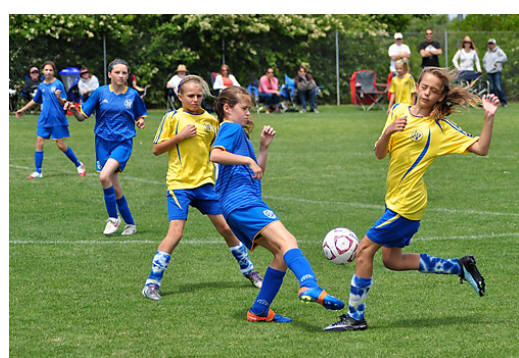 This could mean that ‘weaker’ players could sit a longer time, against teams that are considered to be ‘strong’. The team will always field the group of players that the coach feels is best suited to getting a ‘win’ for the team.
These teams travel each weekend to play normal games. There is pressure on a player ‘to produce’. For competitive minded players, with their soccer skills developed, this provides an outlet for challenging play.
A family has to be financially prepared for the cost of traveling (gas, food), most weekends. This means that the entire family is on the move most weekends, going out-of-town, during soccer season. This does have a direct effect on the family life. This will rack up miles on a family vehicle, so the condition of that vehicle has to be considered.
There is also further expense in terms of uniforms, and warm-up gear for players, as competitive teams want to project an ‘image’. In short, playing competitive soccer will entail extra financial costs, team commitment, and family restrictions.
There is also far greater pressure on a soccer player to ‘succeed’. The parent needs to understand how their player handles constant pressure, or really even wants it.
Competitive teams play in tournaments, which can be at any distance and is an extra cost factor for being on the team. You must be prepared to travel to these games, no matter where they are (some teams go to tournaments in next door states). Depending on where the tournament is, you may be speaking of flying, versus driving time.
It is normal for players to have to participate in team fundraiser drives to get money to play in tournaments. Leagues do not provide money typically for tournament play. This money must be earned solely by the team itself. Each player is then responsible for their own/family expenses to attend the tournament with the team.
There are other items that your player might need. A competitive team typically has more than one uniform. Some teams, for a uniform look, also purchase team sweats, and monogrammed bags. You would have to pay for these extra items. For the girls, this can also include matching head bands.
Some parents look at competitive play as a guarantee for older players, who might be considering scholarships for future school. These parents need to beware of coaches who might guarantee the possibility of scholarships to players, if the player will play for them. Typically no coach can guarantee this item, and it is just a method to get a player on their team.
Competition for good players can sometimes be fierce between coaches. It has happened where a coach wanting a player has visited the home of a perspective player to ‘advise’ the parents about an opposing coach, attempting to plant a question mark in the parents head.
Other subtle acts include ‘inviting’ a player to come practice with their team. All attempts are done to entice a player to play with them, instead of another coach that is also interested in the player.
Nation Wide Problem – Dissent
Dissent at the fields, with coaches & parents yelling at referees, parents of one team going at it with parents of another team, or parents yelling at players of opposing teams, is an on-going problem. Unfortunately, in some scenarios, it leads to physical interactions.
Dissent from coaches and parents, directed toward the youth referees has helped to create a situation where 70% of youth referee do not return after three years. The same corrosive atmosphere created by dissent helps to make the games less fun for players and their families.
If a parent has an issue with referees, they should either talk to their coach, or speak with a league representative. Negative commentary directed toward the youth referees is typically frowned upon, in most leagues/clubs.
If you have noticed that there has been a shortage of referees this year, read this to understand why.
Carpooling
Invariably when a team is traveling, carpools occur. Insure that you have sufficient bodily injury insurance to cover all of the occupants of your vehicle. Your vehicle should also be properly maintained and not have any safety issues (i.e. bad tires/brakes/steering, etc.) If you were to have an accident and be deemed at fault through negligence/vehicle safety problems, you would have liability concerns.
Many families have SUV’s. An SUV loaded to the max with players needs to have all bases covered for safety and liability. It also goes without saying that all occupants need to have seat belts buckled, before the vehicle moves.
Competitive Soccer Finances?
 Simple statement, be involved. Know how your funds are being used by the coach. A well run team will let the team members know, at team meetings, as to where the team finances stand, and how they will be/have been used.
How are the team funds structured, is there a separate account for each player (to account for fund-raiser funds earned, payments made, etc.), or is there just one team account? For most parents, they expect all team members to help in the fund-raising. The question that such a parent may ask is, what happens if a team member does not participate in fund-raising, how is this handled?
Fundamentally, all members of the team should be involved in helping to finance/promote the team. If expenses are being paid for the coach, how are they determined/tracked? The same applies for any team equipment that is purchased with team funds. This equipment belongs to the team, not the coach. If the coach leaves the team, the equipment should be accounted for, it does not go with the coach.
If the team disbands and there is money in the team account, how are these funds to be handled. Some teams have had a team party, using the remaining funds for the party. The next question becomes what happens to any team equipment, which was purchased with team funds. It may be that since the items were purchased with non-profit funds, that the equipment must be turned into the league.
For all financial items, the team should practically speaking be voting on the matter, as they are the parties that have to supply the funds. It would not be unreasonable for the team members to want a financial statement, monthly, of team financial activity. One member of the team could volunteer to do the ‘books’ for the coach, if this is wanted, and to avoid ‘conflict of interest’, it should not be a member of the coaches family, or a close friend. This is an investment that you are making and like any investment, you have the right to know how your funds are being utilized.
Concussions–be aware
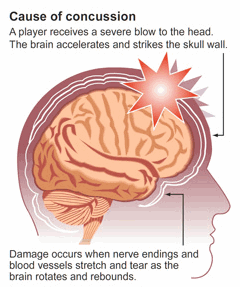 Concussions happen in life, riding a bike, goofing around, and in playing sports. All sports are affected to some degree.
In baseball, T-ball players are told to always watch the batter and the ball. A player not paying attention can get beaned by a fast-moving ball, struck by a player. A fast running track runner could fall in an awkward manner, striking their head. The key to concussions is in understanding them (educational process), and properly handling of them.
All parents should be aware that concussions are not something to be taken lightly, they can be dangerous to the health of your child, both now, and for the future, it not handled properly. It goes without saying that winning or losing a game should never be a consideration of whether your child goes back into play or not. Their health and future well-being is more important than a game, which will eventually be forgotten about.
It is also vital that your player knows your view about protecting their health, versus wanting to stay in the game, or go back into the game. There is a strong factor of ‘team loyalty’ here, which some times can push consideration of health matters aside. How often have you heard of players ‘playing injured’, or not wanting to come out of a game, even when they knew something was wrong. They need to be aware that a concussion has the potential of either killing them, or ruining their life for the future, if not handled properly.
Another key to the picture is that the coach must be aware of concussions and how to recognize and handle them. This responsibility is also a job of a parent, who has a child involved in a sport. The parent has to ensure that they and their player have a proper understanding of what a concussion is, and how a concussion situation should be handled.
Concussion education for coaches/parents is a direct league item, which you would have to speak with your coach about, or your league. Understand that concussions can happen during practice sessions also, not just during games. The coach being concussion aware can be a safety valve for protecting your child at practices, and at games.
I have a section for concussions, which you may view here. Ensure that you take the time to watch the videos, as they will dramatically provide a concussion perspective to you and your player.
Coaching, to be, or not to be
Have you found yourself in one of the following situations?
A. Registered your child to play and received a call from the league stating that they do not have a coach for the team and are looking for volunteers.
B. Have decided that you would like to take an active hand in the soccer training/fun of your child, or other children.
C. Have been upset with previous coaches, and have decided that you must getinvolved, to ensure that your child has the ‘proper’ training and ability to play.
 A league typically runs solely on volunteers. The coaches that you see at the fields, whether at games or practice sessions are volunteers. They are donating their time, and are providing the capability for teams to exist. They work, commute, have families, and other commitments, just like yourself. It is just about universal that coaches are not paid. They often chip in with their own money to buy items to use with the teams. Not all have played soccer before and many are ‘getting their feet wet’ in learning soccer.
There are some coaches that are extremely dedicated to the kids, assuming the coaching position of more than one team, when a league is short on coaches. If the coach did not do this, the league would cut the team without a coach. This typically means that the coach must try to hold what is termed ‘combined practices’, where both teams practice on the same day and time.
In this type of situation, a coach needs all of the help from their parents that they can get. With a large group of parents involved, many should be willing to step up and be an assistant coaches. It is self-evident that one team will have to get assistant coaches, as the team cannot play without a coach/assistant coach at the game. It may be difficult for one coach to be with two teams on game day, due to assigned play times. This is a prime reason why some one needs to step up and work with the coach.
Neither teams or coaches are magically turned into skilled individuals over night, it is a progression, just as exists in everyday life, in learning a new skill. There are ups and downs during this process. To become a soccer coach, a league points a coach to CYSA coaching license courses. In some leagues a coach has to secure higher licenses, to coach older age groups. This is due to older age groups needing advanced soccer training. There are corresponding courses/classes for those interested in training young soccer players. Check with your league regarding availability of courses.
Appreciating your soccer coach

This is a simple question, do you appreciate the efforts of your coach? This does not mean judging them by a win/loss record, it means do you recognize and appreciate the time that they have taken out of their lives to help provide a soccer experience for your player?
This is not an easy path that a coach has taken. They have to dedicate time for practices and being at games. This takes time away from their family happenings. They may also be dedicating time for studying playing habits of other teams, reading soccer training materials, and taking soccer coach classes. At the same time they have to manage, organize, and direct a team of different individuals, all with different soccer capabilities. They also must wear a political/facilitator hat in working with parents, who have their own set of desires/interests/outlooks regarding their player.
A coach may also have the unpleasant job of having to handle different parents on their team who for whatever reason, do not like each other as people. While this has nothing to do with soccer, it can have an effect on the team, depending on the actions of these people.
The coach also has to deal with a subset of people who believe they are the coach during a game, as you can hear them shouting instructions to the players. These typically are the same people who were not interesting in helping the coach with the team at practices, or games. These folks can be totally counterproductive for a team, as they may be giving instructions that conflict with what the coach wants the team to do. These folks, in most cases do not know what the team practiced doing, as they just dropped their player off at practices and took off.
Simply put, your coach has a big job all season dealing with all of the nuances involved with the coaching position. At the end of the season consider letting them know that you appreciated their efforts. Without people stepping up to do the coaching job, there would be many kids without a team to play on, having very sad faces. Make the coach want to stay and come back–appreciate them. This can be a crucial factor for a coach who was ‘drafted’ into the position, just so the team could exist and play. Often this person has no soccer experience and must study and learn quickly, on their own time. It is gratifying for a coach to receive something from their team that their efforts were appreciated.
The Team
 Win, or lose, parents should also do something to acknowledge the efforts of the team for the season, just for being on the field, putting forth the effort. A side note here. If you have a primary goalie, recognize their efforts. Young goalies take it hard when the team loses. They can feel that their efforts caused the team to lose. For older teams, this can be specially true for games decided by ‘kicks from the mark’ (i.e. penalty kick format, each team taking shots at the goal, until clear winner by points is established). The reality is that even professional goalies have bad times in a situation like this.
Consider having an end of season party, where every one can come and have fun. This can be inside, or outside, with the primary emphasis on things for the kids to do.
A key aspect is to remember that the experience of playing the game should be FUN for the players. Coaches and parents must strive to provide an atmosphere that centers around the ‘fun’ theme.
Parents can have a strong influence on how their player enjoys their sport. Players can sometime show disenchantment with the sport, which is not directly related to their liking the activity, but is tied into the environment around their playing.
Some players may tell their parents that they do not want to play the sport any more, due to the activities of coaches/parents, as depicted in the above film. The same can exist for a ‘non-participating parent’, where the parent operates in a ‘drop off’ mode, where they sporadically/seldom attend their players’ games. This can happen in older age groups, where a parent rationalizes that their player’ no longer needs them to be there’. This can be transmitted as a ‘lack of interest’ in what the player is doing.
Players want their parents involved. The parent being there helps a player share their playing experience, and get support when things are good, or bad. Encouraging comments from a parent, during, or after a game, can mean a lot to a player.
Soccer Equipment
Soccer cleats
Cleats may not be baseball/football type cleats, where there is a stud at the toe. There must be an open gap at the toe of the shoe. This is to insure that a player doing a high kick does not have a stud there, which could cause great damage to a player, especially if there are metal studs there. A player can play in tennis shoes, but they will have no traction, which is not a good thing, especially when the ground is wet. Soccer shoes are not required, but are highly recommended.
Shoes come in a variety of price ranges and styles. You should consider the needs of your child’s’ feet, and their age, when purchasing the shoes. Children grow quickly and the shoes for young children are typically only useful for that season.
There are a variety of cleats made, each type of cleat being aimed for the type of playing surface that the player will be on (soft/hard/firm ground). When the ground is slippery, from mud/rain, good traction is very important to avoid hyper-extension injuries. If you have watched football, you are aware that there are times when commentators made comments about players having to change their shoes, due to field conditions. This is to gain traction and avoid slipping. For some, it may be a simple matter of replacing studs on their shoes (for shoes that have removal studs).
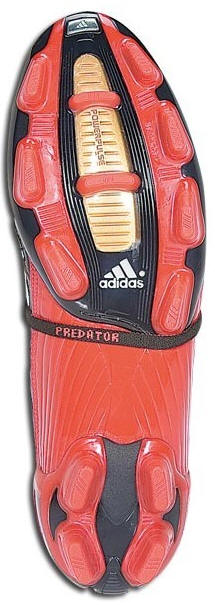
Turf Fields & Soccer Cleats
Final word on cleats, know your fields! It is typical that most players will play on grass fields, especially the younger age groups. Age groups U10 and up, may play on turf fields. This is primarily for traveling/competitive teams. This may also be possible for recreational teams that go to Founders’ Cup, where the fields for that year utilize turf fields.
You need to check with your coach, if you are a competitive team member, and ask if you will be traveling to turf fields, where a different type of shoe will be needed. You do not want to travel to such a field, with the wrong type of shoe, and find out that your player cannot play. You should be aware that on the vast majority of artificial turf fields, players cannot wear metal cleats on these fields.
Soccer shoes, also called boots, cleats or studs, generally come in two styles: molded and detachable — although specialized indoor and turf shoes are available. You also might consider shoes with a fold over tongue. This tongue has extra material to keep your shoelaces covered. This means the knot won’t interfere with your kicking, however, the extra material adds some weight.
Molded vs. Detachable
 Molded cleats have nonremovable studs made from rubber or hard plastic that help form the outsole of the shoe. For kids and beginners, molded cleats are best because they perform well on grass playing fields and are easy to maintain.
 Detachable cleats have studs that are designed to screw in and be easily replaced, allowing players to switch studs for optimal results on different playing surfaces. Detachable cleats are better left to more experienced, serious players.
Indoor Soccer Shoes
 These shoes are designed for use on smooth, artificial turf, wood or carpeted surfaces and feature a flat outsole and rubber bottom for better traction.
Cleat Patterns
You’ll find that, in general, molded cleats have four studs on the heel and eight in the forefoot. This makes them excellent for natural surfaces that are dry but not rocky. Detachable cleats have two studs on the heel and four on the forefoot. This makes them better for soggy, muddy ground and wet fields. The reduced number of studs means that mud has a harder time caking between them.
Materials
Soccer shoes are made from different types of leather, from full-grain calfskin (the strongest and most durable) to kangaroo (more supple and flexible). These leather mold well to the feet and stretch to provide flexibility. Shoes are also available in polyurethane, vinyl and many types of synthetics. Synthetics are best for beginners and kids because they are typically less expensive than leather, but also are less durable and less breathable. Some shoes also have mesh in their upper for breathability.
Soccer Cleat Sizing
When you go to try on soccer shoes, wear soccer socks. These are typically thick socks, which will help determine how the foot fits the shoe. You could be mislead on a shoe fitting, if you wear thin socks to try on soccer shoes. Also be aware that the ‘fit’ of a shoe, in the same size, may differ between soccer shoe manufacturers.
Some shoes are the exact size, some may run smaller. Do not go by size, go by fit on the foot. Soccer cleats are sized like regular shoes but will feel narrow and small because they’re designed to be snug for better ball control. There should be no more than a thumb’s width of space between the toes and the front of the shoes.
Young children should have looser-fitting shoes, so that the cleats don’t affect how the feet grow. However, it’s important that they’re not too big, so don’t buy them with next season in mind. Roomy cleats can cause blisters and injuries as players trip, twist ankles or catch themselves in the grass. In general, cleats for kids are unisex, made for both boys and girls. There also are no specific versions of cleats for older boys and girls.
Soccer Cleat Care
After playing always clean a soccer shoe. Use an old towel or an old sock with hot water and clean the shoe. Never wash it in a washing machine or dry it in a dryer. Let it dry at air temperature. Do not expose shoes to the sun to dry. Once dry apply leather food or conditioner. Check the following video: here
Soccer Shinguards
Types of Shinguards; How to size a shinguard
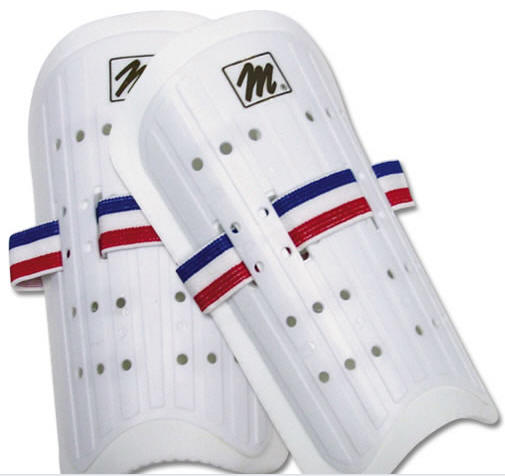
You get the protection that you pay for here. You can go cheap, buying all fabric guards, or pay more money for the ‘hard’ shin guards. The hard guards provide better protection, but are the most expensive.
A proper fitting shinguard should cover from below the knee to the ankle. The player must have shin guards, for all practices and games. This is a CYSA requirement, and is for the safety of the player.
Ensure that you replace the shin guards, as the player grows. Some parents let their players wear the shin guards for too many seasons, figuring as long as they can strap them on, all is good. Well, the leg grows in length, and the shin guard remains fixed in length. The end result is a shin guard that does not totally protect the leg. Safety first!
One other very important item here. Referees inspect player ‘equipment’ (i.e.,shoes/shin guards) prior to the start of each game. If the referee determines that the shin guards are not sufficient to protect a players legs (i.e., they are too short and should have been thrown away years ago), they would be within their rights to not let the player play. This is totally within the referee’s discretion.
 Guard with hard ankle protection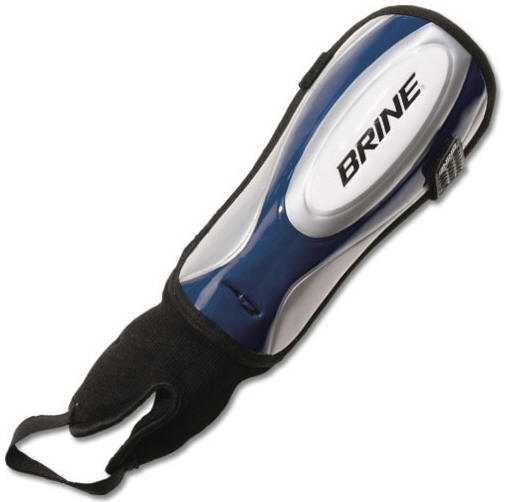
Guard with no ankle protection
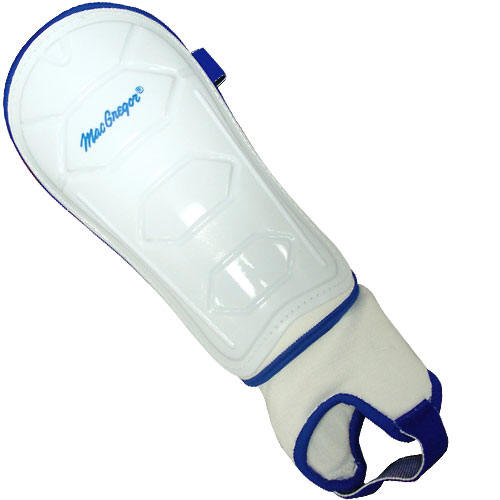
Hard shinguard with soft ankle protection
Padded shinguard, minimal protection against strikes to the leg. This is typically  the cheapest priced shinguard.
Materials
- Shinguards are made to either deflect or absorb the impact of a kick
- They should be comfortable and not interfere with your game
- Shinguards are made from a variety of materials: Fiberglass, foam rubber, polyurethane, plastic, and EVA foam.
- Fiberglass is lightweight and stiff and offers excellent protection
- Foam rubber is light and moldable but offers less protection
- Polyurethane is slightly heavier and less moldable but offers extreme protection
- Plastic is generally a less-expensive shinguard
- EVA foam or lycra backing is commonly found on the backside of all guards for comfort
Player/Position
-
-
- Young soccer players should choose a fiberglass shinguard which offers superior protection and is lighter weight than other materials
- Defencemen should choose a heavier, more protective shinguard
- Midfielders need a combination of protection and lighter weight
- Forwards need a lighter weight shinguard and should also look for one with superior ankle protection
- Some shinguards can be molded and custom designed to fit your leg
-
Components
Ankle protectors
Many shinguards include padded ankle protectors which attach to the bottom of the guard. These protect the ankles and Achilles tendon against direct kicks, but are soft and flexible enough to not interfere with movement Ankle protectors are strongly recommended for players ages 12 and under
Closures
Most shinguards come with hook-and-loop, Velcro type straps that wrap around the back of the leg for adjustable closure Others have no closures and are designed to simply be worn inside the sock
Determining the Right Size Shinguard
It is important that your shinguards fit you properly, ensuring sufficient protection and comfort. Shinguards should cover most of the area from your ankle to your knee. Measure your shin from just below where the knee bends to about 1 inch above your shoe top. This is the proper length of your shinguard
Some manufacturers label their shinguard sizes according to age
Senior (or large) shinguards are generally designed for players taller than 5’4″
Junior (or medium) guards are designed for players shorter than 5’4″
I have not heard from my coach
This is a typical statement that a parent may say, after registering their child to play soccer. What you need to know is that soccer leagues routinely register players well in advance of when they actually play. Typically a team will start practicing a month before the season starts. The coaches may not even have their team ‘rosters’, showing who is on their teams until slightly before this point. The time leading up to that point is taken by the league register in registering the players, creating player passes, and getting information out to the parties that will put players together on teams. After all of this is done they typically will have a coaches meeting, where the team information is given to the coach. It is only at this point will the coach have the information to contact a player. The questions that you may ask at registration are:
When does the playing season begin/end
When does practice begin
When does a coach receive the information to contact their players
You may want to find out at registration if they have a person that manages your players’ age group. This information may be listed on the web site of the league, if they have one. If your player has not heard from their coach, within one week after the coaches receive the team information, you could contact the party that handles your age group.
Some coaches are slow in contacting people, but most will want to contact their team immediately, as they wish to have a team meeting to talk about the season, and want to start practicing immediately.
What A Coach Is Not
 Your coach is NOT your hired babysitter. Some parents have a routine habit of dropping their player off at practices and using the time period as their ‘free time’. It annoys coaches that these parents will routinely show up well after practice is over, expecting the coach to remain there with their player.
It has to be remembered that a coach is giving of their time to coach the team. The coach has been at work all day, may have stopped at home using just enough time to change clothes, and pick up their soccer equipment. They may have not had dinner, and have not had time to be with their family. They have every reason to want to leave practice, on time, and get on with their life. They do not get paid a salary and they are just volunteers.
The coach cannot substitute for you in knowing the medical history/condition of your player. If there were items that were not told to the soccer league, or the coach, regarding the health of your player, this could affect the health of your player, if an item were to come up. This especially includes any needed medications, which might need to be on hand for the player.
If your player is lacking in soccer skills, due to either starting to play at an older age, or because they learn at a different pace, you may have to help. Most coaches do not have the time to devote to one-on-one training during a practice session. They and their assistant have to work with an entire team of players.
What coaches will do when they have a subset of players needing fundamental training is to work with them for a short while in practice, and then have them rejoin the main group. This is where an assistant coach really comes in handy for a coach. They can would with anyone needing additional help, while the coach works with the team. You should be aware of any additional ‘home study’ that you player needs to do, to sharpen their skills. This becomes your job as a parent to ensure that your player works on the item(s).
If you are aware that your player needs additional training/learning, you need to work with them at home. This is where your being at practices and watching what the practice sessions consist of, can help you with your player.
There is one skill, which all soccer players must have, the ability to run. If you are a jogger, consider jogging with your player, which helps with their conditioning for soccer.
If you know nothing about soccer, the best way to start learning is to volunteer to help your coach during practice sessions. A coach could demonstrate to you what they want done and you would work with a subset of the team. You would have no need to feel embarrassed about it as you would all be learning at the same time.
With this learned knowledge, and having practiced it yourself, you would be in a good position to help your player. Accumulating such knowledge from a coach could also help you toward becoming a coach yourself, to work with your own child, for both the fun and in furthering your child’s soccer skills.
In short, a coach is not a substitute baby-sitter, has a life of their own that needs to be recognized by you, may need you help as a team assistant to help run the team efficiently, expects you to work with your player at home on sharpening/reinforcing skills, and needs you to inform them of any medical conditions related to your player.
Referees
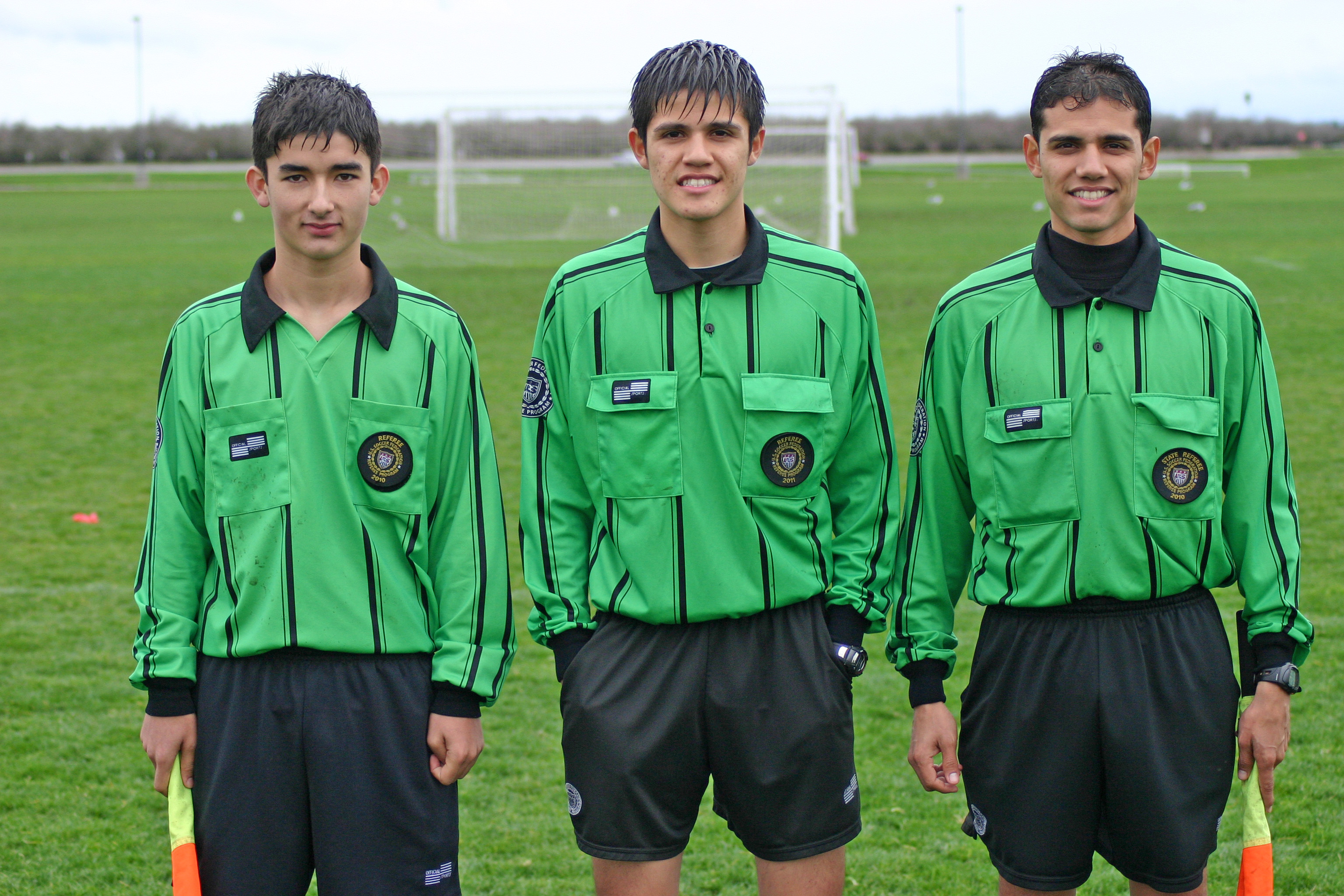 This is an area that requires attention, by all parents. The vast majority of referees are youth referees. These youth have attended a training course, and passed an extensive test to receive their referee badges. They have put a good degree of effort into this.
When they begin doing their games, they are trainees, learning the system, and especially learning to work with players and crowds. Typically new referees start off in the U8-U10 age group and progress up to the older age groups, depending on their demonstrated abilities. On a U10 game, your entire referee crew could be brand new referees. Typically the center referee will have more experience than brand new assistant referees, in a U10 game. For a young child, this is an enormous task, and they are to be commended for willing to do so. It is to be expected that there may be mistakes made, as the youth referees are learning as they go.
Any one that has watched World Cup games should fully understand that even advanced, professional, referees are prone to errors. Absolute perfection is sought by a referee in doing a game, but mistakes do happen.
Most of the referees are also players in the league in which they referee. They play the game and they know the laws of the game. Their knowledge of the game is way above that of the average spectator/parent. Too many people do not give credit to the youth referee for who they have become. They are a licensed referee, under FIFA guidelines. They have the same authority as an adult referee, and deserve the same respect. The normal spectator could not officiate a game, but they claim (in their mind) that they know all of the rules.
The youth referee is at times belittled for being too young, too small, too indecisive, and incapable of making a proper call. This is characterized by shouting at the young referees, by coaches and parents. This has no place in the game, as it is intimidating to the referees, and does not give respect to their status as a licensed referee.
Some parents/coaches that shout demeaning commentary to the youth referees have players of their own that are refereeing. If they were to see people reacting to their child, as they and others act toward referees, it is doubtful that they would appreciate it.
Help the youth referees to become better by encouraging them, not degrading them, they have a hard job, with little to no appreciation. Soccer leagues lose a lot of youth referees simply because they cannot take the harassment directed toward them. For some, they stop playing soccer altogether. This impacts not only the available referees for assignment, but also impacts the number of players to form teams.
It is ironic to hear coaches/parents harassing referees, but at the same time will be quick to state, ‘you would not catch me out refereeing’. Why is that?
One note, if you are at a game, and your game is short on referees, it is because there are not enough youth to go around. Many will say, why are there not more adult referees available for their games? It is simple, the adult referees are in a small percentage in most leagues, with the over-whelming referee core being youth referees. When the youth core shrinks, games are not covered. Most people do not like their games not being covered by a full three person crew, but they do not stop and consider as to why there are not enough referees to go around.
Adult referees are typically spread thin, with possibly one adult assigned to work with two youth, when available. Otherwise, the youth crew have to go out and fend for themselves. Want to keep your youth referees, make them feel appreciated/wanted.
Becoming a youth referee can provide a youth with income, development of skills working with others, public communications and working with the public skills, comradeship, and more awareness of the game of soccer.
Problem With a Coach / reporting a coach
If you have problems with your coach, give them the courtesy of speaking to them first. If you have spoken with them, and nothing was resolved, or if you feel that you cannot speak with your coach, speak to your league immediately. This is to insure that a minor issue does not turn into a major issue.
If the issue is one affecting your player, either physically, or psychologically, it needs to be handled ASAP. Too often parents will wait until the end of the season and then say ‘it has been happening all season’, in regards to an issue. It is then too late to work the issue at that stage. Typically a league will investigate an issue, speaking with parties, sometimes with other teams.
If the season is done, or the item is ‘old’, no one will remember anything about it. Complaints need to be filed when the ‘issue/incident’ is fresh in the mind of everyone. A good primer is available here, that you might read.
Some parents will say that they don’t want to make things rough for their player, thinking that if they complain, the coach might retaliate against the player. Are their coaches that may do this, maybe, but if so, the league needs to know about them.
It needs to be considered if whatever ‘problem’ exists, is it directly affecting the player’s ability to play the game AND have fun doing so. If the player shows signs of not wanting to attend practices, or games because of the ‘issue’, it needs to be talked about immediately. If you do not know who to speak with, call the league phone number and speak with someone, or leave a message asking to be called back.
If in a very rare case a coach steps across the line and threatens you, physically, immediately report this to league. If there is no evidence to support your charge (i.e. emails, message left on your voice mail, witnesses, etc.), it will be difficult to prove, but it needs to be brought into the open. The flip side of this is that the league, for absolute fairness, has the obligation to ensure that coaches are not subjected to false, demeaning claims (this can happen when their are ‘personality’ clashes between a parent and a coach, or a parent wants to ‘get even’ with a coach, for lack of perceived playing time, or other allegation-unfortunately).
Some leagues have what are called ‘Age Group Coordinators’ who work directly with the league age groups. If you know that your league has these, find out who yours is and speak with them. The next level up from an AGC (Age Group Coordinator) may either be a ‘coach coordinator’, or a recreational/competitive coordinator. As like a business, there are levels of operation within a league.
If previous resolution attempts fails, you may take your issue to your league directly, by attending a league board meeting. If your league has a web site, the date/time/location may be posted on the site, for all meetings. These meetings are open to the public. You can attend one at any time, if you are curious about the operation of your league.
There have been ‘issues’ that have arisen that have nothing to do with the player playing the game. It has been adult issues revolving around personalities, or what some term as the ‘coaching style’ of a coach. Each coach is different, and each will do things differently. The experience level of each coach will also be different and the ability to train will be different.
It is often stated that a parent wants their player on a ‘winning’ team. While each team strives to achieve this, not every team is a winning team. The strength of a team is determined by many factors, and the coach is not necessarily in control of all the factors.
For instance, some leagues have a ‘50% play rule’ for recreational teams. This means that all players must play a minimum of 50% of the game. This means that a coach cannot keep their best players on the field, to win a game. All players must play at least 50%, and some of those players may be ‘weaker’ than other players, simply due to length of time playing soccer, or training.
Another key factor is that recreational soccer is supposed to be geared more toward the aspect of ‘having fun’ and gaining soccer skills. If you find that you, or your player is focused more on wanting to ‘win’, you might want to look into playing competitive soccer, where this is the primary focal point.
You will need to understand that there are more requirements/costs in playing competitive soccer, and more importantly, your player is not guaranteed a certain amount of playing time, as typically exists in recreational soccer. Ensure that you have read the section ‘Recreational or Competitive Soccer’, in the section above.
There is always the presence of adult ‘personalities’. There are times when a coach and a parent may not get along, because of non-soccer related issues. If this occurs, the adults have to put this aside at the fields and allow the children to play and have fun. Adult personality clashes have no place on the fields, in front of the players or other parents.
You should be aware that a coach has the same right to speak to the league about problems they are having with parents. All spectators at the games come under the jurisdiction of the league, and they are accountable for their actions just like the coaches. Accordingly, action can be taken against any spectator that may cause disruption at any team function.
A complaint from a coach would be investigated in the same manner as a complaint from a parent, with subsequent action/non-action based on evidence found. In the vast majority of cases, the results of such investigations/actions are not made public. This is typically handled as a confidential matter, as most personnel issues are handled in business firms. Such items are also typically not discussed in OPEN board meetings, but are generally handled in CLOSED board meetings, where the proceedings are not available to the public.
Problem With A Parent On Your Team
Just as with coaches, personalities sometimes will cause problems between people. If you feel that a parent is causing a problem for you, a player, or the team, you need to speak up. If you feel that you can speak with the parent, that should be your first step, and the second step being speaking with the coach.
If you wish to speak to the league, do not be surprised if they ask you to put it in writing, so that they can investigate it. Some leagues insist on having documentation, to avoid people making false claims, or not being willing to stand behind what they have stated (this would leave a league no basis for continuing the complaint). The league has the duty to protect everyone from false assertions of wrong doing, as well as protecting the teams.
The league will normally take your information and assign some one to investigate it. Such items are typically considered ‘personnel actions’ and are not published. If you see nothing change, you could ask again about the matter.
How to Spot A Bad Youth Sports Coach
Well, no need for me to talk on this one, an on-line group has an excellent write-up on this.

What, No Assistant Team Coach?
Some coaches prefer not to have an assistant coach, they want total control of the team for themselves. There are many different reasons for this thinking. Some things that approach does are:
- Eliminates the discussion between coach and assistant as to how the team is to be run
- Eliminates potential ideology issues between coach and assistant.
- Makes the coach the total central point for the team
- Can cause issues for games/practices. Under Cal North rules, all coaches have to be back-ground checked and cannot work with a team until they have cleared the background check. If the coach is absent, no other party can be in charge of the team, as they have not gone through the background check and are therefore not approved by Cal North to be with the team. This can mean no coach, no game/practice. There is a standard that some leagues follow where a league board member can step in and work with a team during a scheduled game, so that they can play their game. No parent could step-up to be in temporary charge of a team unless they had been background checked and cleared by Cal North.
- Having only one coach can mean that player’s that need individual attention might not get it, as the coach has to work with the entire team.
- If the coach has minimum soccer experience, it means that they do not have the ability to draw from any experience of an assistant coach, which might cover their experience gap.
- If the coach leaves, or gets sick and cannot continue coaching, the team has a serious and immediate problem. Their practices and games become in immediate jeopardy. This same item applies if the coach is ejected from a game and has to serve a suspension, which includes no contact with the team.
League Fundraiser
 League fundraisers exist to help fund league activities, for both recreational and competitive soccer. A typical ‘registration fee’ may not pay all of the leagues cost for providing soccer to your player. Some leagues may elect to not do a fundraiser and just build what is sometimes called a ‘fair share’ cost into the registration cost.
If a fundraiser is done by a league, they typically will inform you at registration, letting you know that you must participate in the fundraiser when it is held. Each player is responsible for sharing in the league costs. A league may offer the opportunity to ‘opt out’ of participating in the fundraiser by paying a ‘fair-share’ amount to the league. A league may stop a player from playing, if they do not participate in the fund-raiser, or pay their ‘fair-share’ amount.
You should be aware that a league may charge a ‘bad check’ fee, if a check bounces, which can then cost you more money, and result in a player not playing. A league could require the total amount due to be paid, before the league will allow the player to continue playing. Check your league policy for fundraising responsibilities/costs, if they have one.
What do registration costs/fundraisers pay for? The following are some typical items:
Registration fee to Cal North for registering a player
Cost for renting fields
Cost for balls given to coaches
Player Uniforms
Newspaper advertising costs
Field Maintenance costs
Field equipment (goals, anchors, nets, flags, signs)
Field lining costs (equipment,paint,paying for lining)
League accounting costs (includes tax preparation)
League misc. supplies cost
Costs for league office, if the league has one
(rent,phone,utilities,internet,etc.)
Administrative costs for running the league (supplies,
advertising, etc.)
Referee pay
Trophies/medals for players
Website
Costs for board member(s) to attend state functions
Soccer goals & related accessories
Portable toilets
In short, the league has a wide variety of business operational costs, as it is a business operation. These costs must be paid by the families receiving the league services. As leagues incur extra costs to operate, the fees for playing in the league will accordingly rise, as the extra expense must be covered by the families that are playing. It can be normally expected that the cost to play will rise in direct relationship to the cost for the league to operate.
Parent Web Resources
Four Ways Youth Parenting Can Help Or Hurt A Child’s Experience
US Youth Soccer: Recreational Soccer Video
Soccer Rules Of The Game For Baffled Parents
New To Soccer, Or Need Some Fundamental
Information On Soccer? The Following Will
Help You!
Basic Soccer Information For Parents
US Youth Soccer: Positive Parenting Video
The Ten Commandments of a Soccer Parent
My Youth Soccer Guide: Selecting Cleats
(A must for parents purchasing cleats)
US Youth Soccer: Reasons Why Children Stop Playing Soccer
US Youth Soccer video: How a parent influences their soccer player
How To Be A Good/Bad Soccer Parent
DISCLAIMER: THIS WEBSITE DOES NOT PROVIDE MEDICAL ADVICE
The information, including but not limited to, text, graphics, images and other material contained on this website are for informational purposes only. The purpose of this website is to promote understanding and knowledge of soccer and soccer health related matters. It is not intended to be a substitute for professional medical advice, diagnosis or treatment. Always seek the advice of your physician or other qualified health care provider with any questions you may have regarding a medical condition or treatment and before undertaking a new health care regimen, and never disregard professional medical advice or delay in seeking it because of something you have read on this website. Soccer information is related to players playing in Cal North/CYSA soccer organizations.
Copyright © 2014, Jack Smith, All rights reserved. Information contained within this site may not be reproduced on another site, or copied into other documents, in part, or whole.